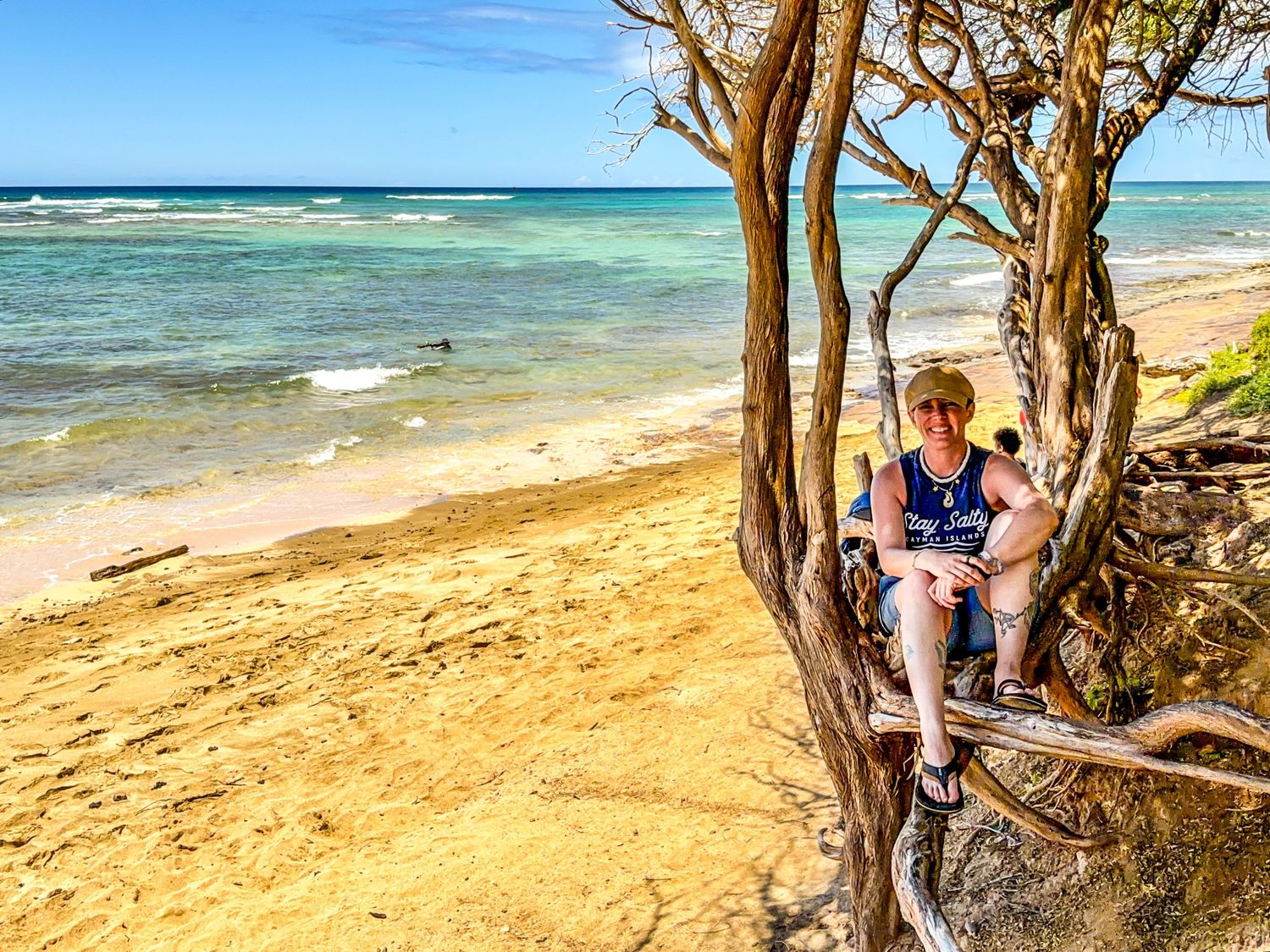
I didn't plan to make photographs in Hawaii. I planned to rest.
That lasted about ten minutes after landing.
Because that's the thing about training your eye for years as a photojournalist - you don't get to turn it off. You walk into a room and you're already reading the light. You round a corner and your brain registers a frame before you've consciously decided to lift the camera. Hawaii didn't slow that down. It redirected it.
What I found on Oahu wasn't the island I expected. I knew the postcard version existed. Diamond Head. The famous stretch of Waikiki. The aerial shots of the Na Pali Coast that live on every travel blog. I wasn't interested in competing with ten million identical images. So I stopped trying to, and something else opened up.
The Fire
The first time I photographed fire dancers was at a luau, and I almost didn't bring my camera in. I figured it would be performative in the way that tourist experiences sometimes are, technically impressive but emotionally thin.
I was wrong.
There is something that happens when someone is that close to open flame and that completely at ease with it. Their focus changes. Their face changes. And when the firelight catches them just right, there's nothing performative about it at all. It's ancient and immediate at the same time, and the camera has no choice but to respond.
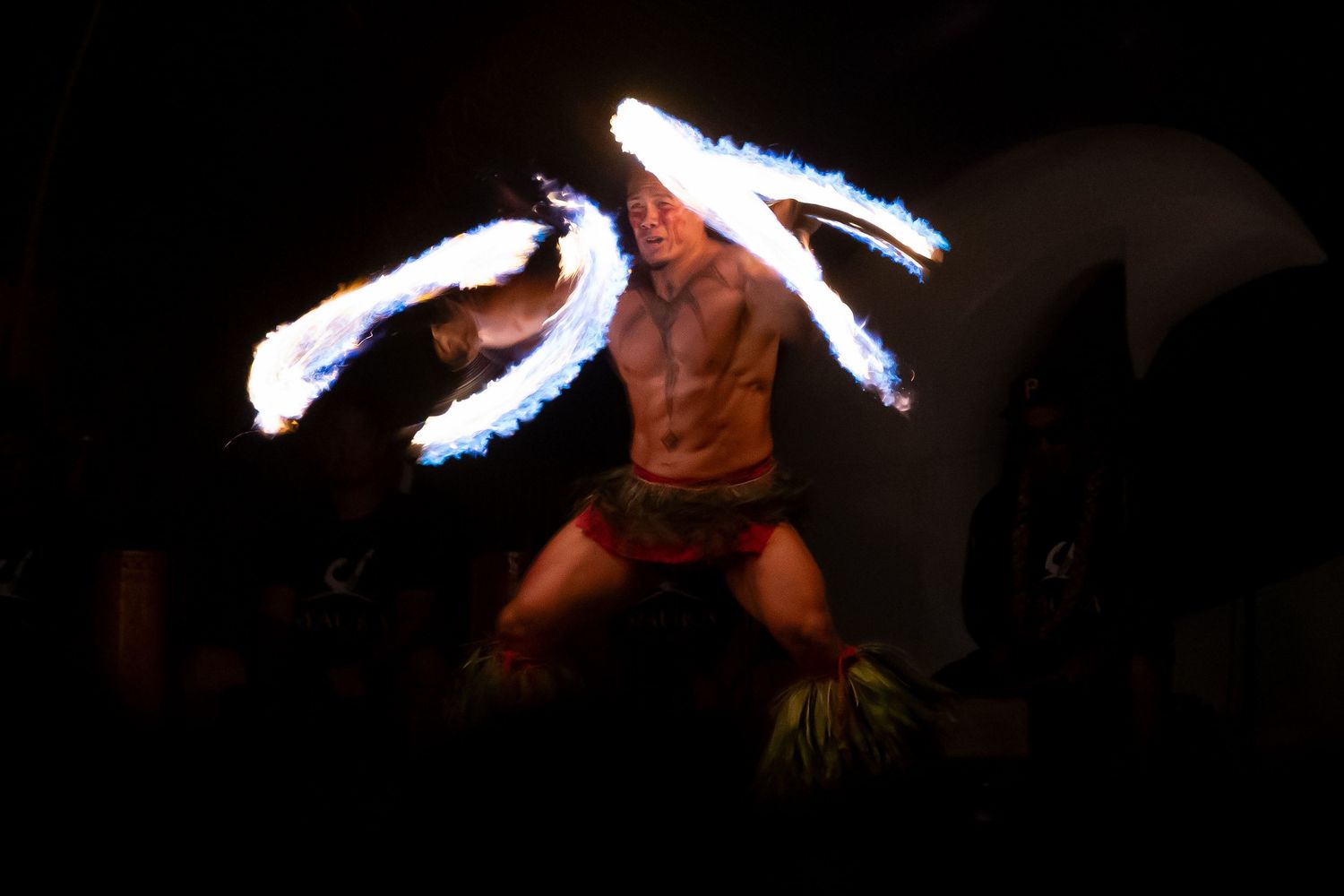
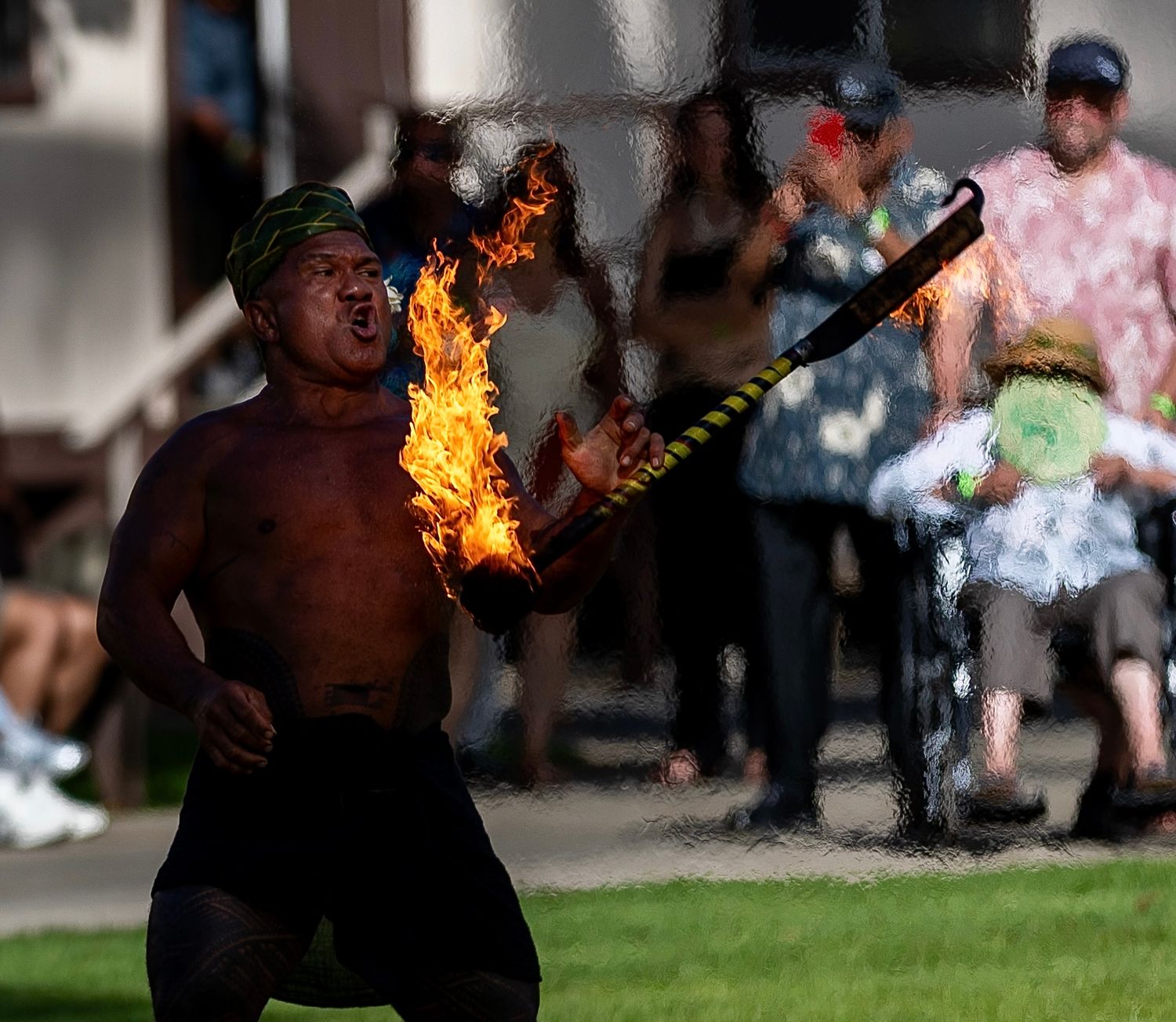
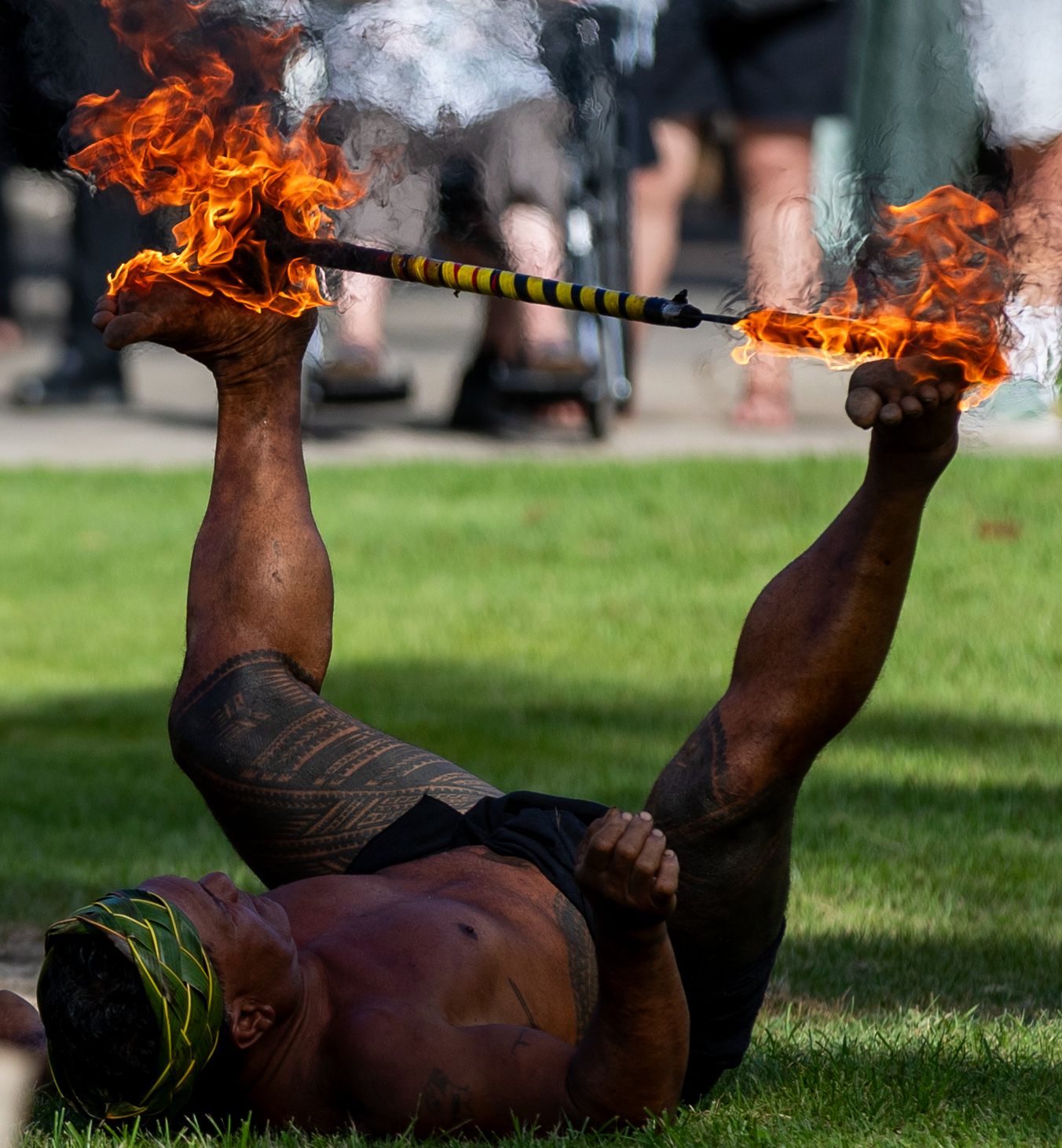
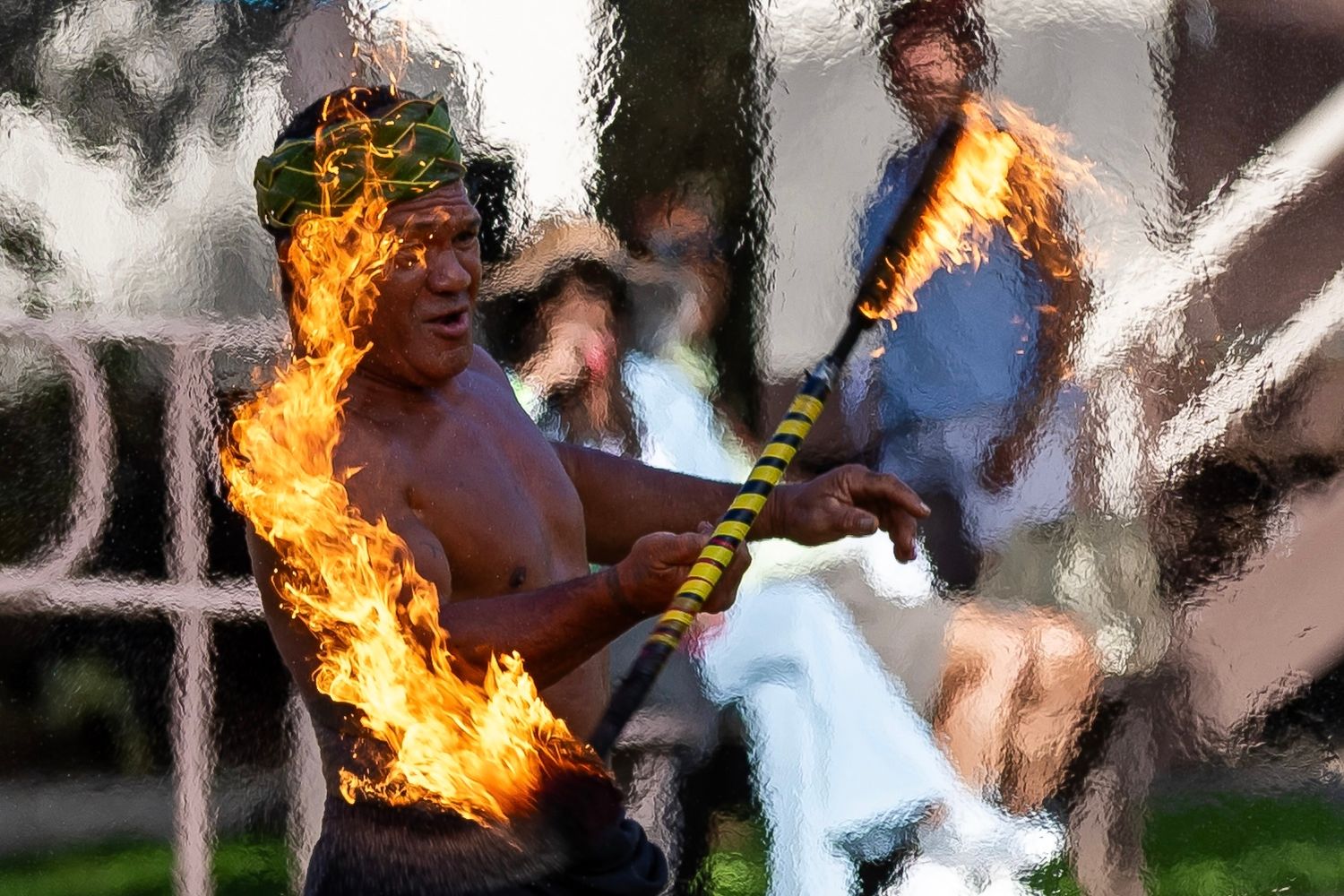
The second time was at the Polynesian Cultural Center, and the scale was different. The fire dancers I was able to capture were during the day, not at the official show they have a night. Unfortunately, they don't allow people to take photos during that show. But the same truth underneath: this is not a show pretending to be something real. This is something real that happens to have an audience. The light still did what light does. It found the faces and told the story.
If I came home with nothing else, I would have been satisfied with those frames. But Oahu kept offering things.
The Bird Nobody Warned Me About
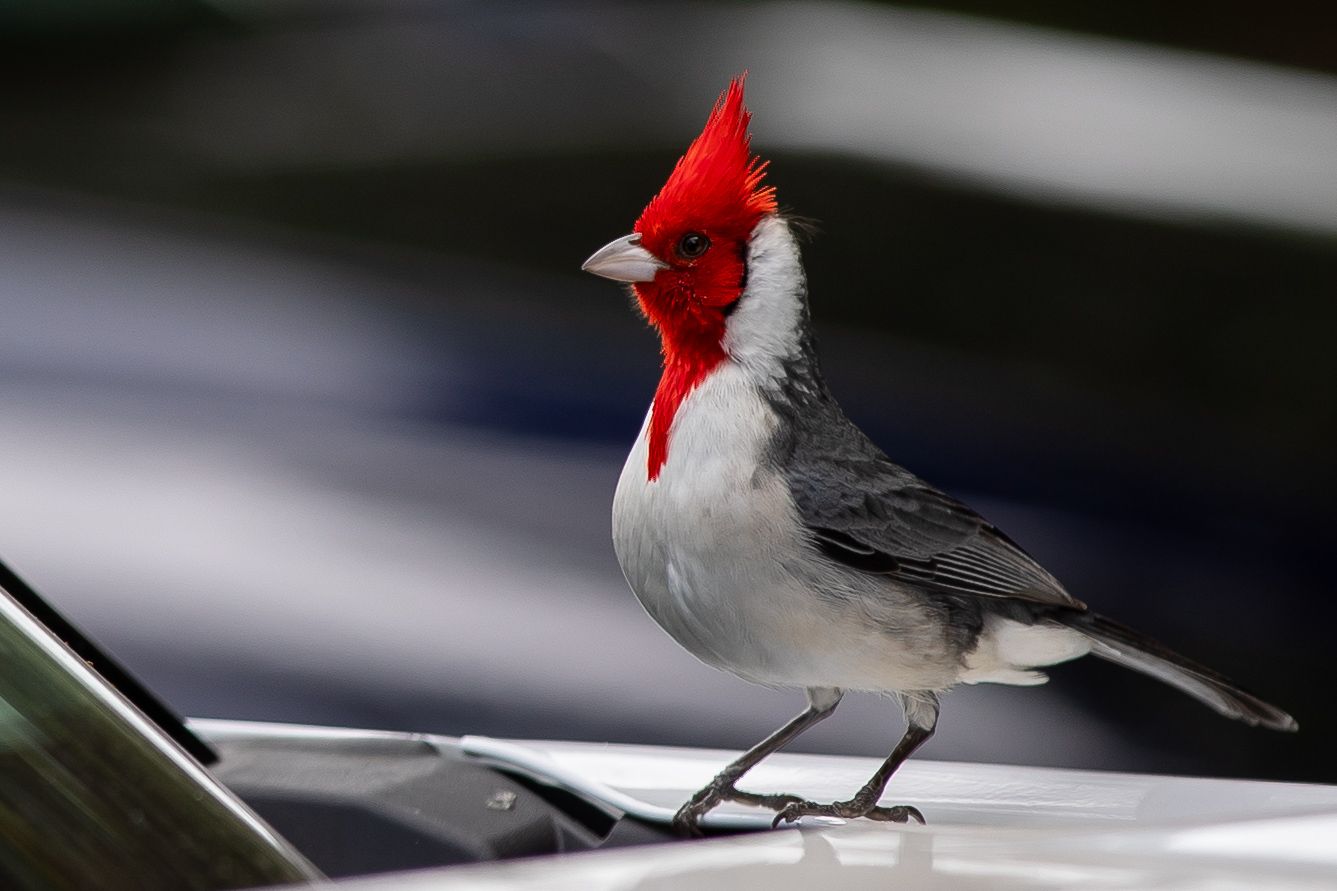
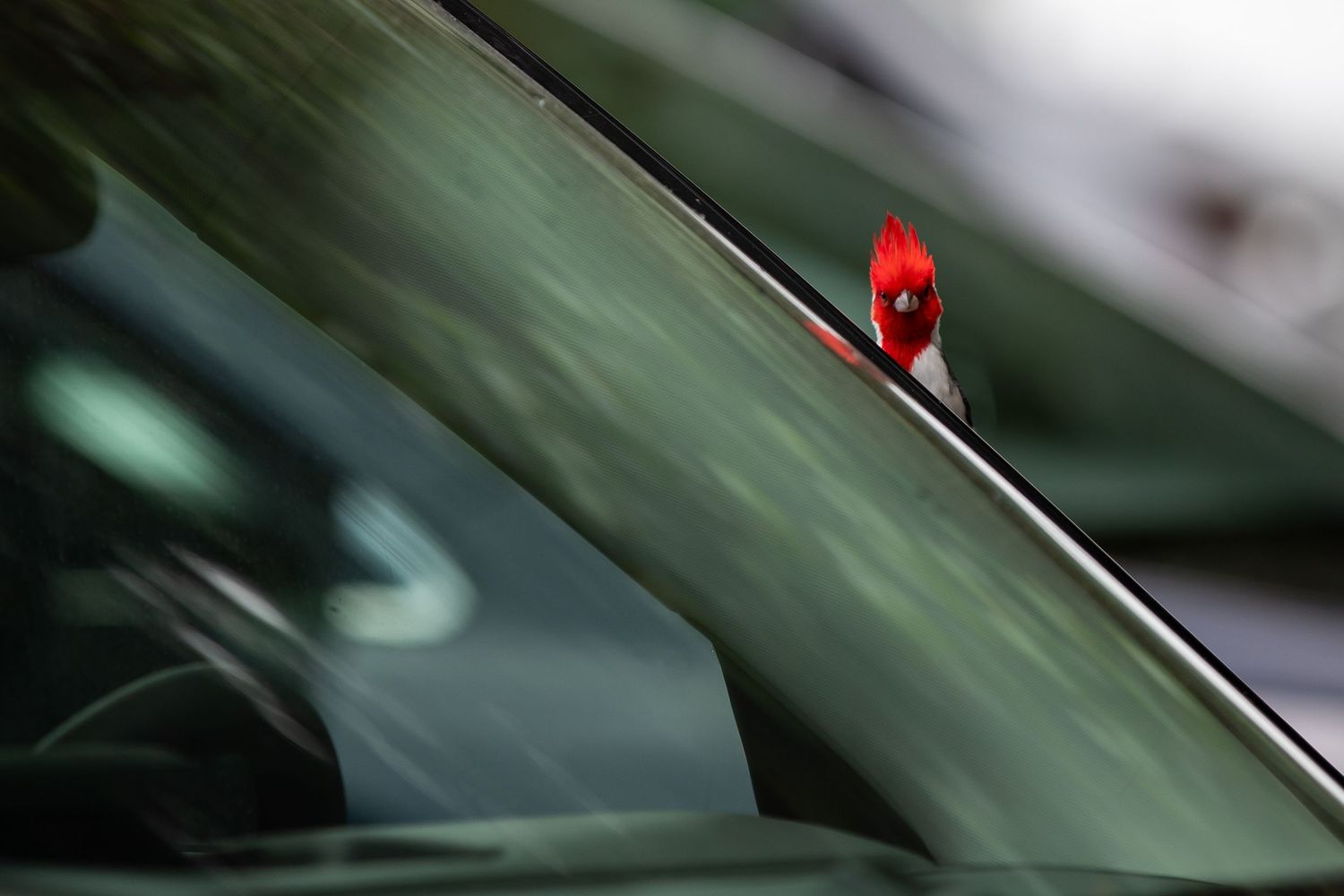
At some point during one of my wandering mornings, a small bird landed close enough to photograph properly. Bright red head, clean white chest, completely unbothered by my presence. I had no idea what it was.
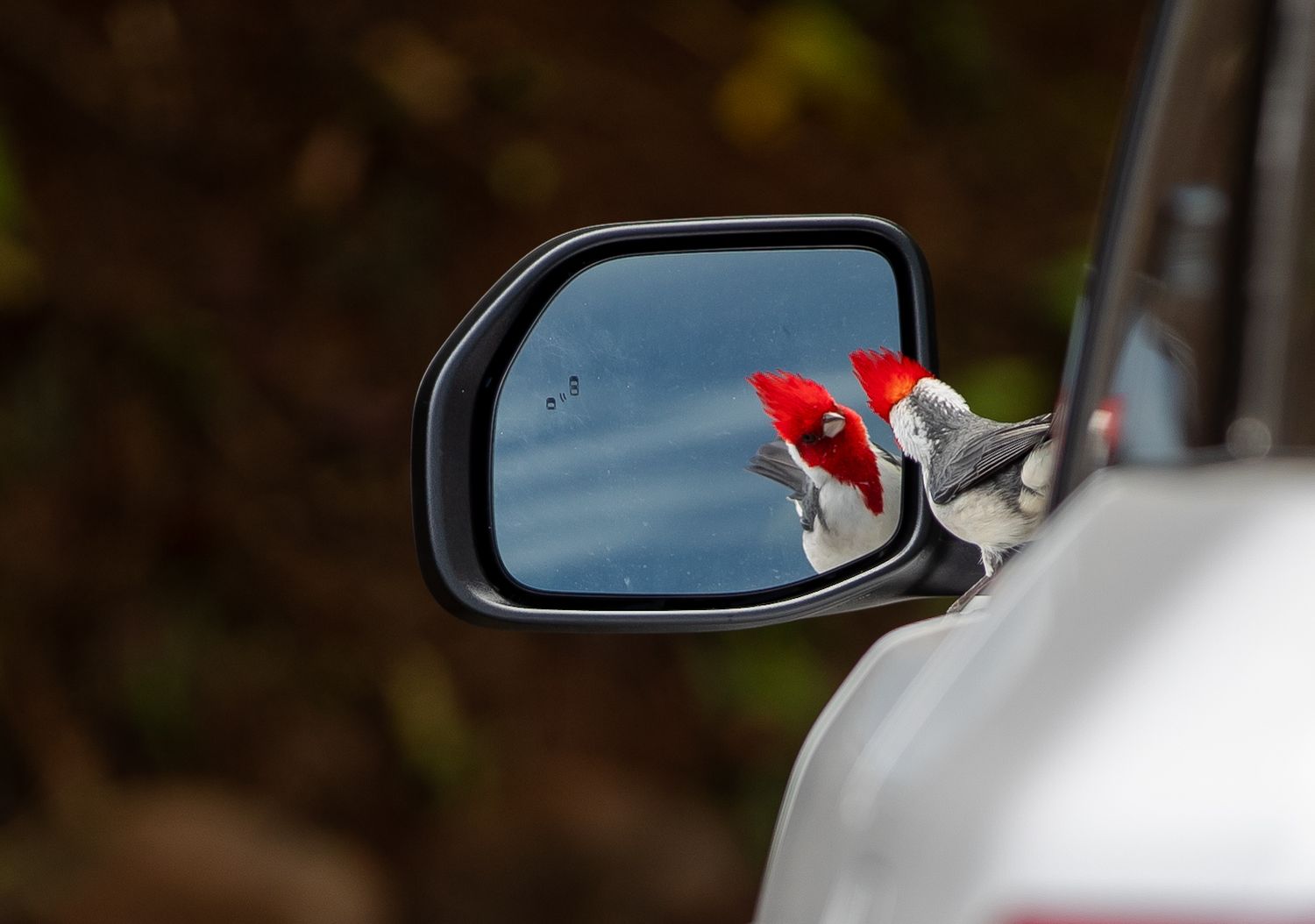
The red-crested cardinal, I learned later, is not native to Hawaii at all. It was introduced from South America and has been thriving on the islands since the early 1900s. It belongs there now in every practical sense, even if it wasn't originally from there. This one also was enamored by his reflection.
I liked that detail. Oahu is full of things that arrived from somewhere else and became essential.
The Van
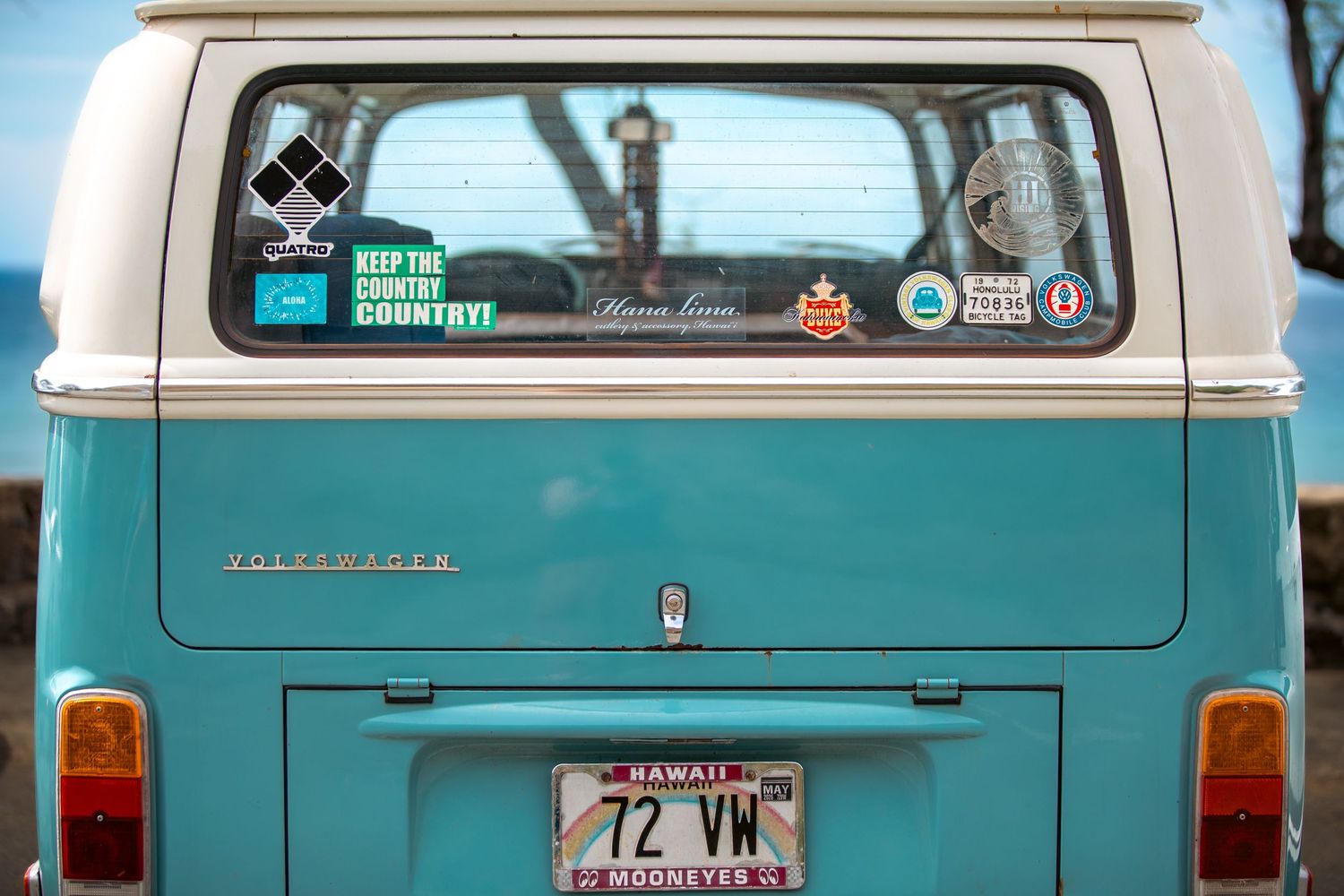
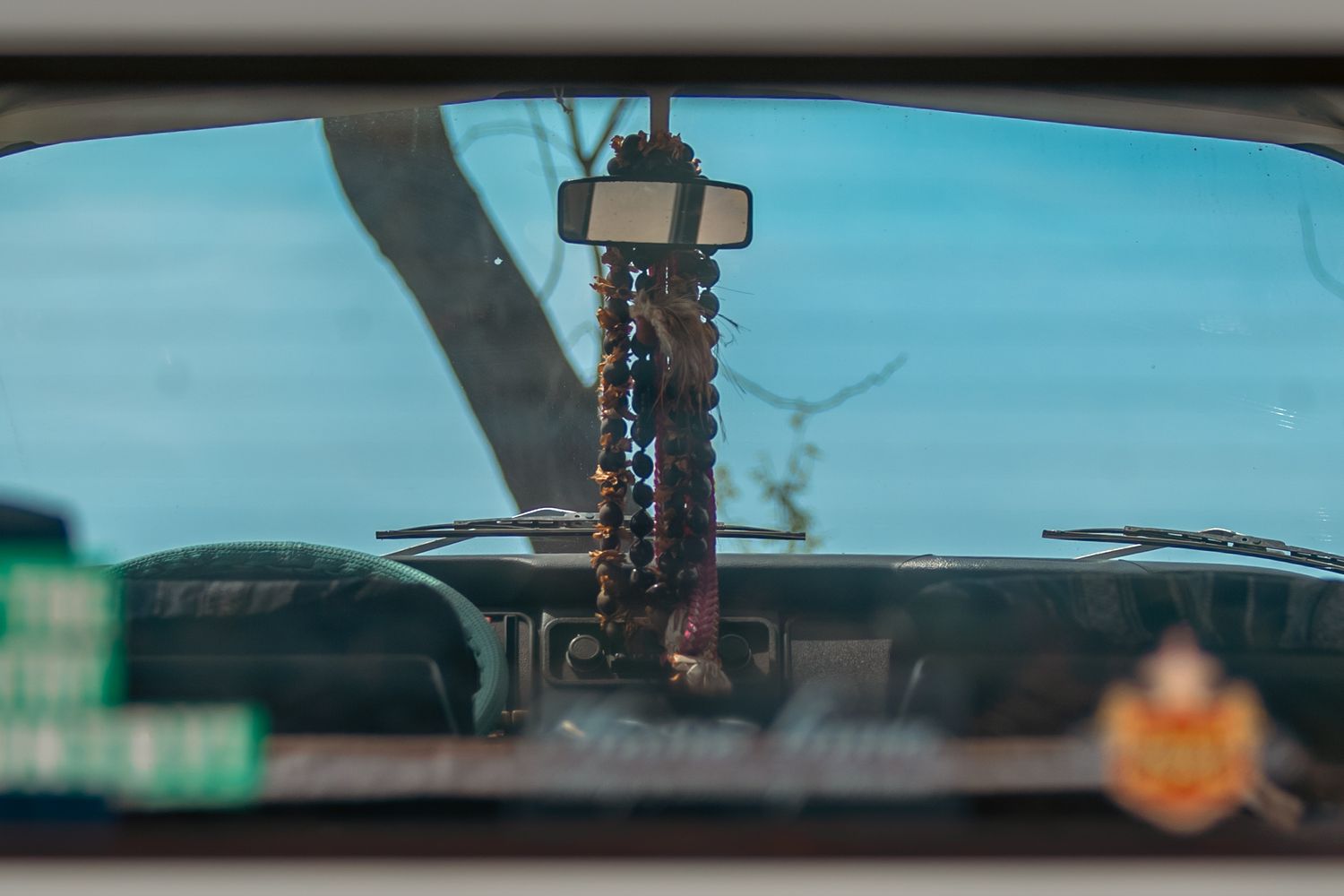
You can learn more about a place from a parked vehicle than from most museums.
This VW van had layers. Stickers accumulated over years, things hanging from the mirror with obvious intention. It was clearly someone's daily life, not a prop. Nobody staged it for a photograph. It just existed there, carrying its history around on the outside the way some people do.
I've photographed versions of this in other cities. A car becomes a self-portrait when someone lives in it long enough. This one was a love letter to the islands from someone who clearly meant it.
The Last Evening
My last night on Oahu, I finally put the camera down.
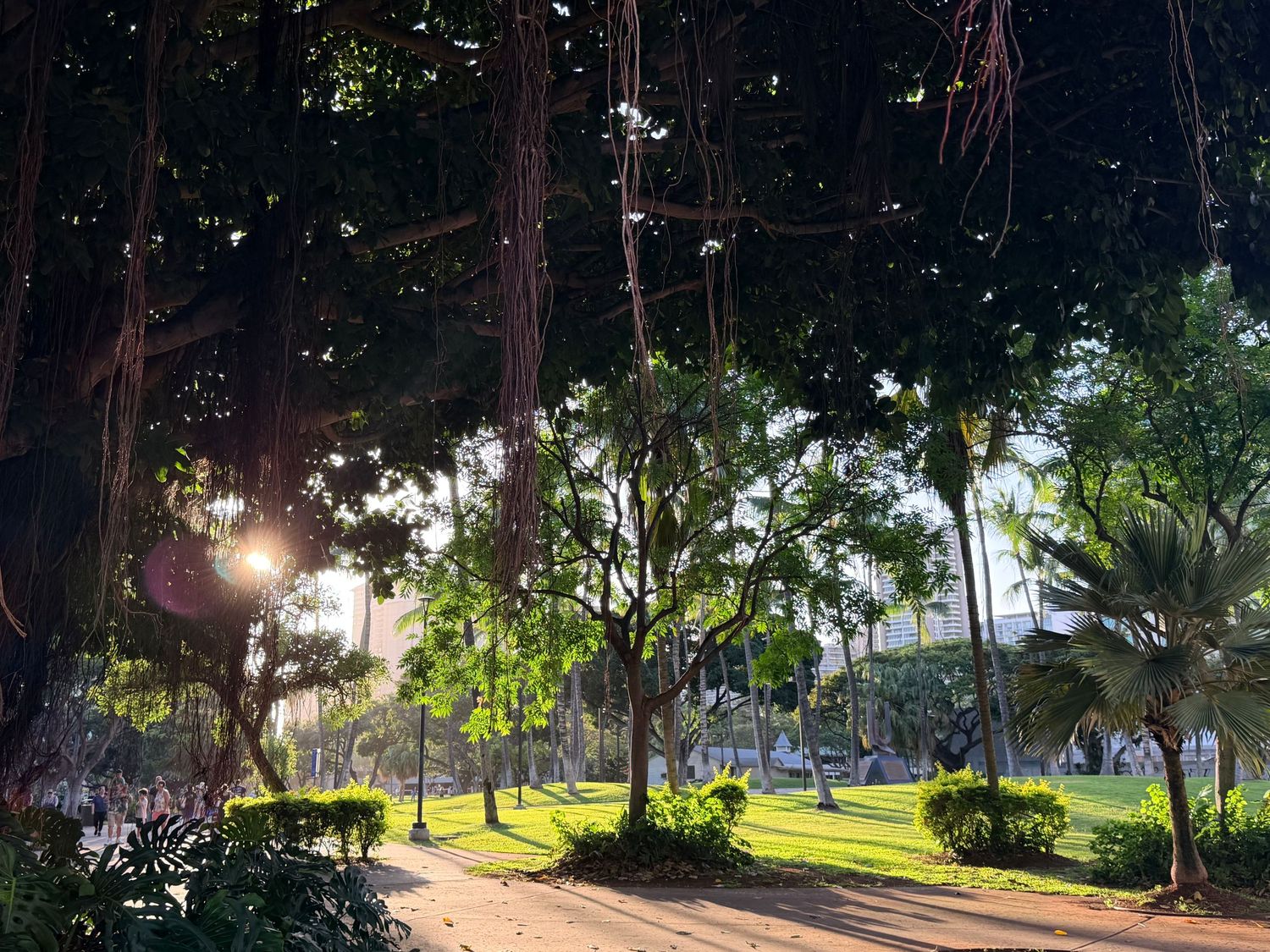
I was walking through Fort DeRussey Park near the waterfront when the light shifted in that particular way it does in the last thirty minutes before sunset, where everything goes warm and slightly unreal. A massive banyan tree framed the scene, its aerial roots hanging like curtains. Beyond it, through the palms, the Honolulu skyline.
I shot it on my phone.
There was something right about that. No gear, no deliberate framing, no professional obligation. Just a person in a place, noticing the light, making one frame because it would be strange not to. The city in the background is what makes it honest. This is not an island outside of time. It's a place where people live, work, commute, and also stop sometimes to watch the sun go through a banyan tree.
That's the Oahu I found when I stopped looking for the postcard. Not hidden, exactly. Just waiting for someone to look a little to the left.
A Note for Fellow Photographers
If you're planning to shoot on Oahu, my honest advice is this: give yourself at least one full day with no agenda and no shot list. For wildlife, the red-crested cardinals are everywhere once you know to look for them. Morning light in the parks near Waikiki is softer and less crowded than you'd expect.
And bring your phone on the last night. Sometimes the best frame of the trip happens when you're finally not trying.
Jenny Kirchner is an award-winning photojournalist and wedding photographer based in Gettysburg, PA, with work that has appeared on CNN, NBC, and Good Morning America. She photographs destination weddings and portraits for couples who want images that feel true. See her work at jennykphoto.com or explore more travel and photography essays at jennykphoto.com/blog.