It Was Not the Soft Sunrise Photo You Have Seen
There was a kite stuck in the cherry blossom trees.
Not figuratively. A real kite, bright nylon caught in the branches above the Tidal Basin, its string hanging down while three people below tried to figure out how to get it out without disturbing anyone. Nobody succeeded. Eventually they just left it there, fluttering against the blossoms, and walked away.
That was the afternoon I photographed the D.C. cherry blossoms at peak bloom.
What Peak Bloom Actually Looks Like
You have seen the photographs. Empty paths at sunrise, soft pink light, blossoms perfectly still against a pale sky.
That happens. It requires an alarm set before 5 a.m. and a willingness to be in position before the crowds arrive. It is worth doing if that is the image you are after.
But it is not what most people experience when they visit the Tidal Basin during cherry blossom season. And it is not what I was working with that afternoon.
It was midday. The light was harsh, coming straight down with the kind of contrast that blows highlights and punches shadows in ways that feel unforgiving until you learn to work with them. The wind had not stopped all day. And the Kite Festival was in full effect, hundreds of people launching color into the sky, lines crossing in every direction.
One of those kites did not make it. It ended up in the cherry blossoms and stayed there.
How to Actually Shoot in These Conditions
Harsh midday light at the Tidal Basin is not a problem to solve. It is a condition to use.
Work with the contrast, not against it. Strong light and shadow create graphic compositions that soft golden hour light cannot. Look for blossoms backlit against a bright sky, where the petals go translucent. Look for faces in open shade under the tree canopy, where the light is even and the blossoms frame the background.
Let the wind become the shot. A still blossom is beautiful. A blossom in motion tells you something about the day. Use a slightly faster shutter speed to freeze the movement, or let it go soft intentionally. Either decision is a choice. The mistake is fighting it without deciding.
Shoot into the crowd, not away from it. The instinct is to angle for an empty frame. At peak bloom on a Saturday, that frame does not exist. Instead, treat the crowd as your subject. The energy of thousands of people experiencing the same thing at the same time is its own kind of remarkable.
Find the pockets. Even in the middle of everything, there are small quiet moments if you slow down enough to see them. A couple standing just off the main path. A child stopped still, looking up at the petals coming down. Those frames are always there. You have to be willing to wait for them.
The Technical Reality
Harsh light means you are managing exposure constantly. In bright midday sun, expose for the highlights and let the shadows fall where they fall. A blown highlight in a blossom is lost. A dark shadow still holds detail.
Wind means your subject is never where you anticipated. Anticipate anyway. Watch the trees and learn their rhythm. The gusts come in patterns. There is almost always a pause, brief and usable, between them.
Crowds mean your composition is shifting every few seconds. Stop trying to lock one in. Instead, find a position that works and let the scene move through it. The frame will come together and fall apart and come together again. Wait for together.
Why Imperfect Conditions Produce Real Photographs
I walked away with images I am genuinely happy with. Not in spite of the conditions. Because of them.
Limitations force intention. When everything is working against you, you stop waiting for the perfect moment and start making something out of the real one. That shift changes how you see. It changes what you come home with.
The cherry blossoms at the Tidal Basin are extraordinary whether you arrive at sunrise with a tripod or at noon during the Kite Festival with a crowd pressing in on every side. The blossoms do not care. They are doing what they do for exactly as long as they do it, and then they are gone.
If You Are Planning Your Own Visit
Go during the week if you can. The Kite Festival runs on the weekend and brings a different kind of crowd and energy. Both are worth photographing. Neither is better. They are just different stories.
Arrive early for the light and the quiet. Arrive at noon for the life. Arrive at dusk for something in between.
But go. Do not wait for perfect conditions. They rarely show up on schedule, and the real version of the place is always more interesting than the controlled one anyway.
If you have questions about shooting in D.C. or want to talk through your own approach before you go, reach out. Happy to share what I know.
Washington D.C. Cherry Blossoms: Quick Facts Worth Knowing Before You Go
The cherry blossoms at the Tidal Basin are not just a seasonal backdrop. They carry more than a century of history in every branch.
Japan gifted the original trees to the United States in 1912 as a symbol of friendship between the two countries. More than 3,700 of them now ring the Tidal Basin and surrounding areas, according to the National Park Service.
Peak bloom lasts only a few days. That short window is exactly why the crowds arrive fast and why timing your visit matters more than most people expect.
The National Cherry Blossom Festival draws more than one million visitors each year. Add the Kite Festival running simultaneously on the weekend, and the Tidal Basin becomes one of the most densely populated outdoor spaces in the city.
A short window, a lot of people, constantly shifting light. That is the real photographic challenge of the season, and it is also what makes getting it right worth something.
Best Time to Photograph the Washington D.C. Cherry Blossoms
Timing matters more at the Tidal Basin than almost anywhere else. The bloom window is short, the crowds arrive fast, and the light changes the entire character of the place depending on when you show up.
Here is what each part of the day actually gives you.
Early morning, right after sunrise, is when the photographs you have seen online are made. The light is soft and directional, the wind is at its calmest, and the paths are quiet enough that you can actually compose without someone walking into your frame. If you want clean, still, luminous images, this is the window. Set the alarm and be in position before the city wakes up.
Late afternoon offers softer light than midday and a slightly different quality of crowd energy, families starting to leave, couples slowing down, the day beginning to exhale. You will still be working around people, but the golden warmth coming in low across the water can do things that midday light simply cannot. Worth staying for if you arrived early and have the energy.
Midday is the most challenging window and the most honest one. Harsh light, strong shadows, wind that does not negotiate, and crowds at their fullest. It is what most people actually experience when they visit. It is also, with the right approach, completely workable. Shoot tighter to eliminate competing elements. Expose for the highlights and let the shadows hold. Use the wind as movement rather than fighting it as interference. Look for the small quiet moments that exist even inside the chaos.
The reality is that most people do not get to choose their window. They get the day they can go and the conditions that are there. Knowing how to read each one, and adjust to it, is the difference between coming home frustrated and coming home with something real.
Photographing Cherry Blossoms in Crowds: What Actually Helps
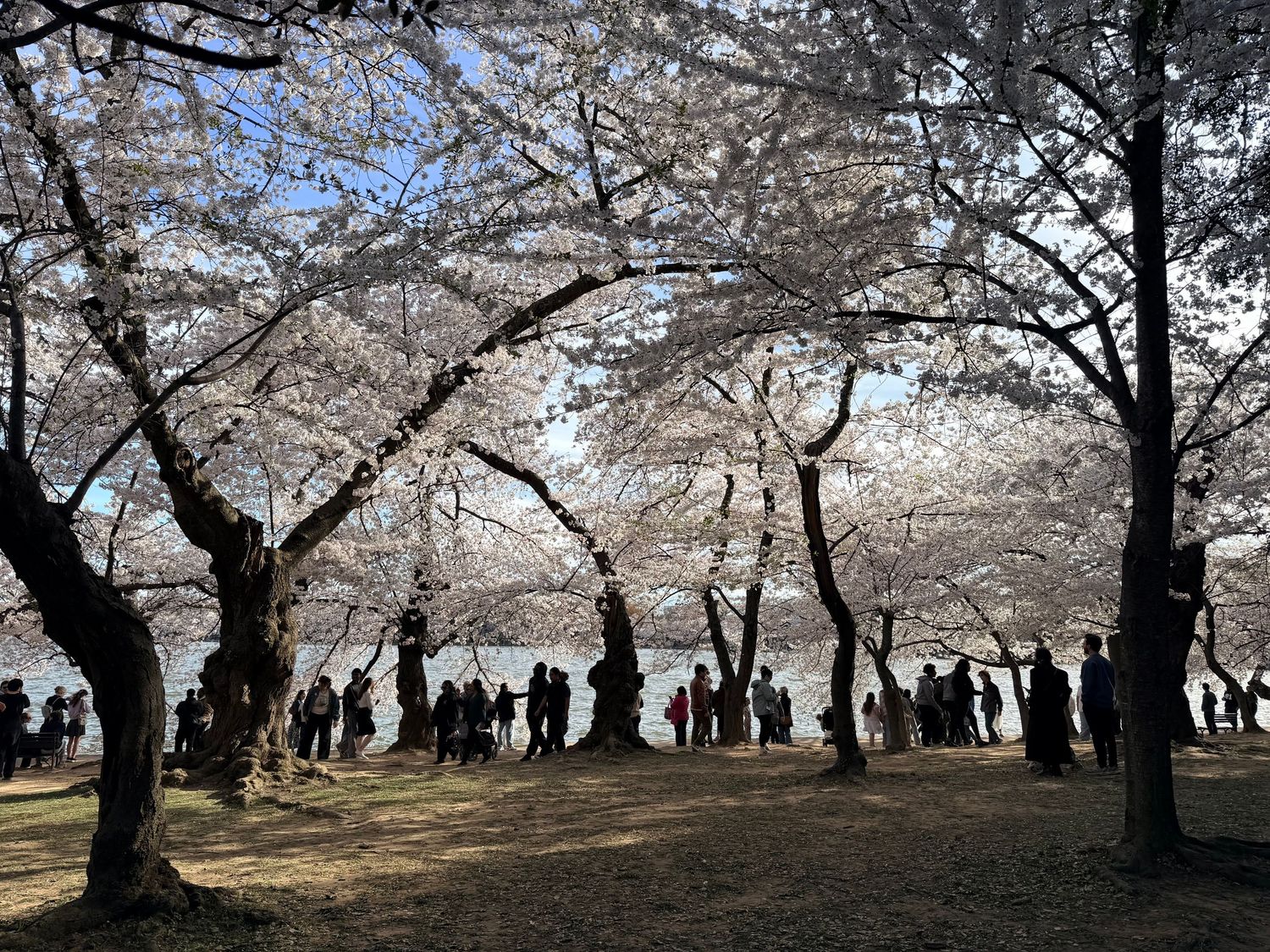
Expect crowds at the Tidal Basin during peak bloom. Not inconvenient crowds. Thousands of people, shoulder to shoulder, all pointed at the same trees.
Here is what actually helps.
Stop shooting wide. The instinct is to capture the full sweep of the Tidal Basin, but that frame includes every person, stroller, and tangled kite line in your vicinity.
Shoot tighter instead. Fill the frame with blossoms, use branches as a foreground layer, let the crowd blur into color and suggestion in the background. Compression does the work that empty space cannot provide.
Watch the edges. Distractions enter at the corners, not the center. A small shift left, right, or down often removes the element that was breaking the frame. You do not have to move far. You just have to notice where the problem is coming from.
Let the scene move through your position. Chasing a clean frame in a crowd means you are always one step behind it. Instead, find a composition that works and hold it. People move. Gaps open. The moment you want will come to you if you are patient enough to wait for it.
Use the wind as a decision. Blossoms in motion are not a problem to solve. They are a choice to make. A fast shutter freezes the petals mid-flight. A slower one lets them blur into something that feels like the day actually felt. Either is valid. Drifting between the two without deciding is the only mistake.
Stay in it. The Tidal Basin during peak bloom is loud and full and relentless. It is also, if you slow down enough to look, full of small true moments happening everywhere at once. A child stopped still under a shower of falling petals. Two people attempting a quiet photograph while the world presses in around them. Those frames are always there. They just require you to stop looking for the empty scene that does not exist and start seeing the real one that does.
Washington D.C. Cherry Blossom Photo Gallery
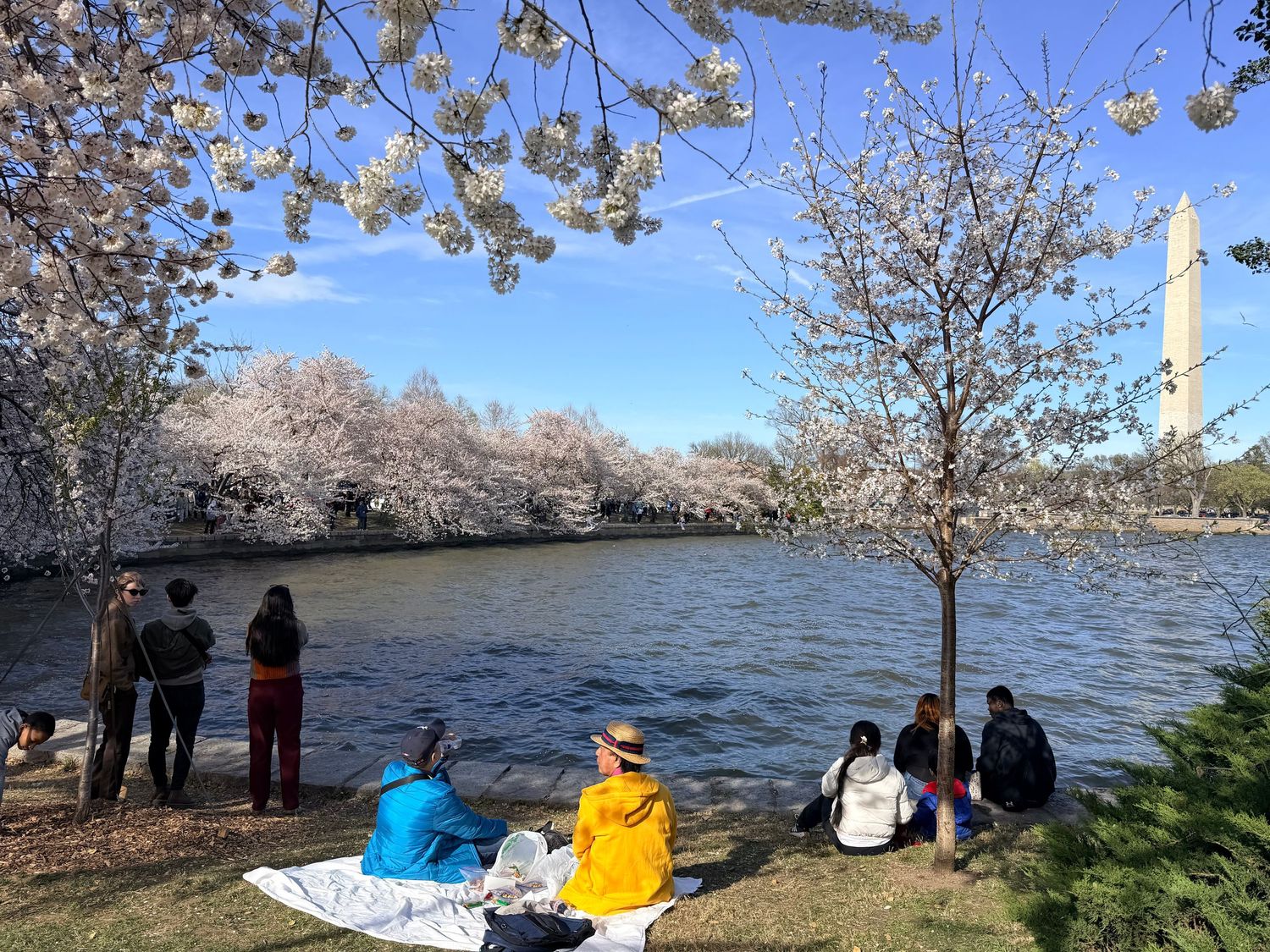
Here’s a look at what photographing the cherry blossoms in Washington D.C. actually looked like this afternoon, real conditions, real moments, and everything that came with it.
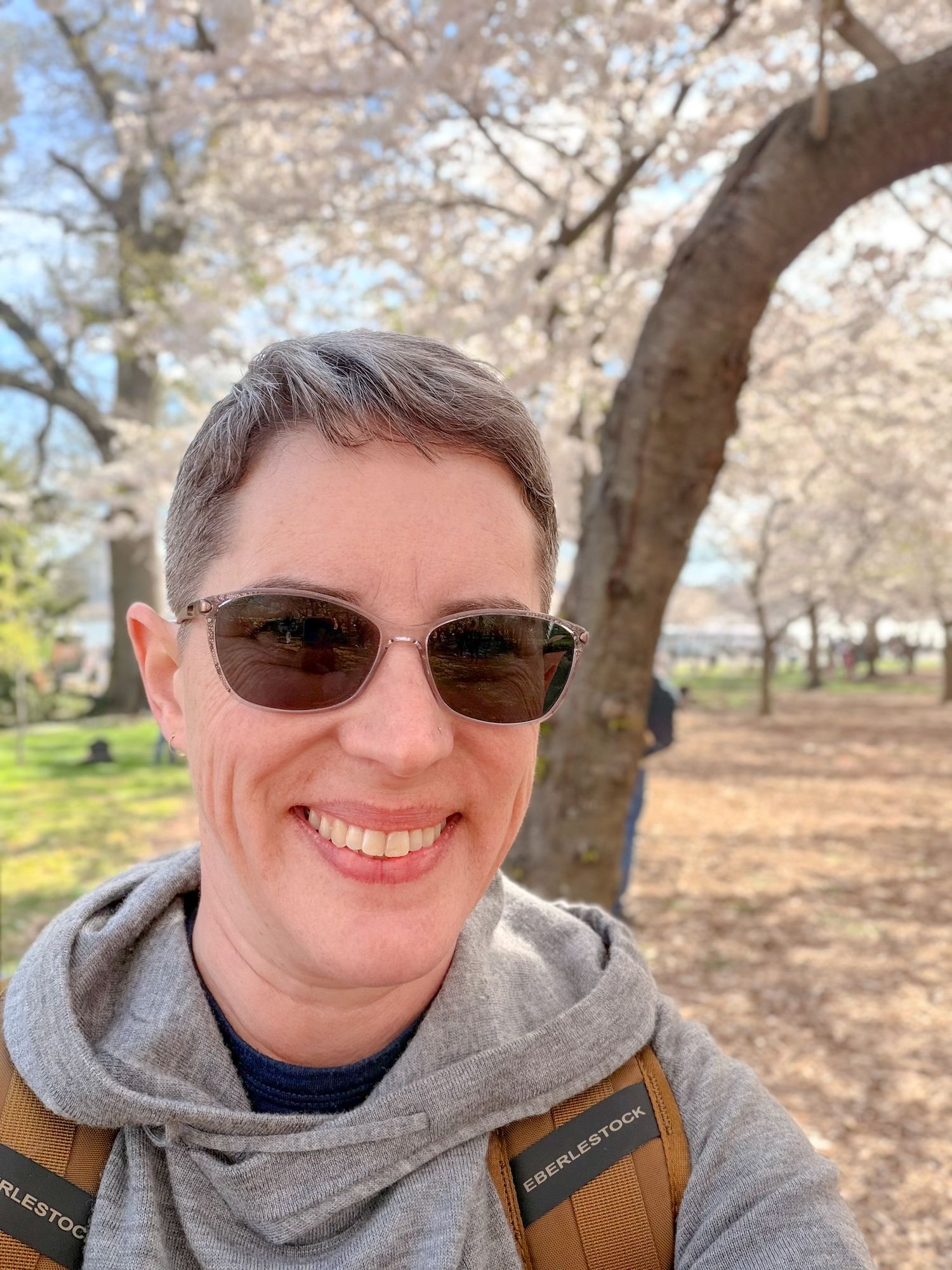
A quick look behind the scenes of what it actually took to get these photos in the middle of the National Cherry Blossom Festival.
Behind the Scenes
Enjoy what you see?
support my work
I don’t usually ask for support, but if you found this post helpful or enjoyed the photos, this is a simple way to support my work.
Everything you see here takes time, travel, and a lot of behind-the-scenes effort to create and share. If you’d like to help me keep doing more of this, I appreciate it more than you know.
